What conditions can it improve?
-Neck Pain
-Upper/Lower Back Pain
-Migraines
-Arthritis
-Epicondylitis


office@mccooktherapy.com

511 S Nebraska St. Salem, SD 57058
245 W Main St. Canistota, SD 57012
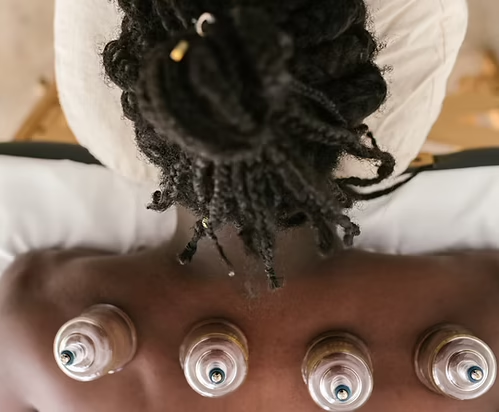
Cupping is a noninvasive treatment that involves the use of glass cups placed on a designated area of the body and a vacuum or suction technique is used to remove the air from the cup, drawing the skin upwards. Cupping can be used to draw blood to or away from certain parts of the body, increasing recovery and reducing several common ailments.
-Neck Pain
-Upper/Lower Back Pain
-Migraines
-Arthritis
-Epicondylitis
Cupping may be beneficial for any ages and stages experiencing pain. Reach out to McCook Therapy and Wellness and see if Cupping is appropriate for you!
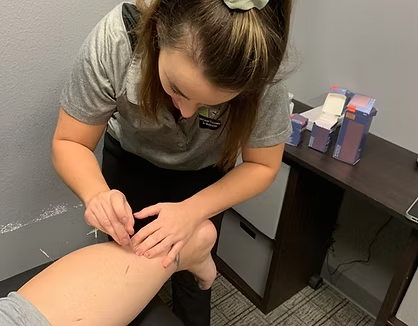
Dry Needling is a treatment technique where a trained Physical Therapist inserts a small, filament needle into the affected or painful tissue, often known as a trigger point. The insertion of the needle into the tissue allows for a release of the tightness and evokes a healing response to the area.
A trigger point is a hyper-irritable muscle that presents as a taut band of contracted muscle fibers. These are sometimes thought of as muscle “knots” and can cause local or referred pain.
Dry Needling can be used to treat headaches, low back pain, shoulder pain, hip/leg pain, muscle cramps/tightness, and symptoms of numbness/tingling. It can also help speed up the
healing process following an injury such as a sprain/strain of a ligament or muscle.
No. Dry Needling and acupuncture are two completely different treatments. Here’s why: Dry needling uses research based evidence to target dysfunctional muscles, tissues, or nerves. We insert the needle into the impaired tissue itself. Acupuncture is based upon Eastern medicine beliefs of affecting the energy flow pathways or “meridians” of the body.
Blood flow restriction, also known as BFR, is a specialized training technique that uses specifically designed cuffs to restrict returning blood flow from a specific limb to the heart while continuing to allow blood flow from the heart to the limb. This technique enhances the recovery process while reducing the impact and stress placed on the body. Think low load, big results!
BFR is ideal for all ages and activity levels that are looking to address injury, increase strength, and improve post-surgery recovery.
BFR allows users to lift light weights and reduce the amount of stress placed on the affected limb while still achieving muscular gains and aerobic capacity changes similar to high intensity training. BFR is great for maintaining strength and muscular endurance throughout the stages of life.